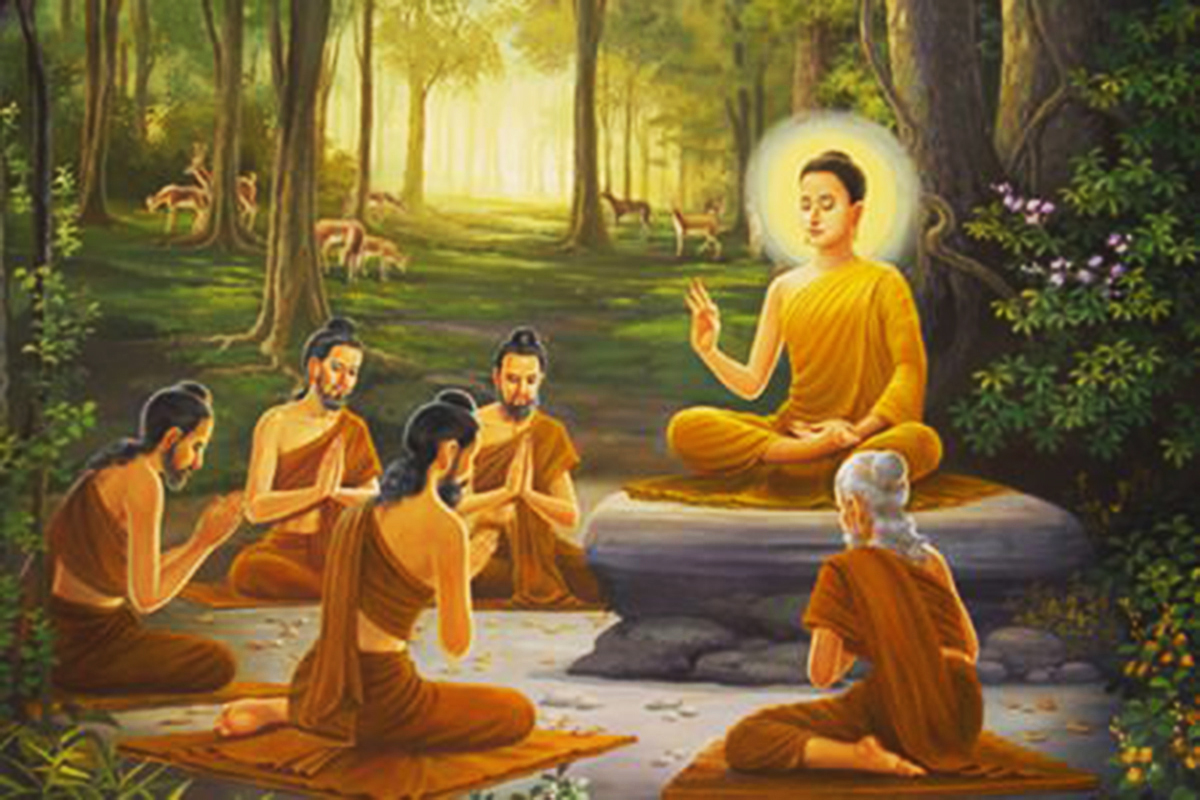
The Four Noble Truths
The foundation of Buddhist teaching, these four truths explain the nature of suffering and the path to liberation.
The Truth of Suffering (Dukkha)
Life inherently involves suffering, dissatisfaction, and unease. This includes physical pain, emotional distress, and the fundamental unsatisfactoriness of existence.
The Truth of the Cause of Suffering (Samudaya)
Suffering arises from craving, attachment, and ignorance. Our desires and attachments create the conditions for suffering to manifest in our lives.
The Truth of the End of Suffering (Nirodha)
Suffering can be overcome by eliminating craving and attachment. Liberation from suffering is possible through the cessation of desire.
The Truth of the Path (Magga)
The Eightfold Path provides the way to end suffering. This practical guide leads to the cessation of suffering and the attainment of enlightenment.
The Noble Eightfold Path
The practical guide to ending suffering, organized into three groups: Wisdom, Ethical Conduct, and Mental Development.
Wisdom (Prajna)
Right View
Understanding the Four Noble Truths and seeing reality as it truly is, free from delusion.
Right Intention
Cultivating thoughts of renunciation, goodwill, and harmlessness toward all beings.
Ethical Conduct (Sila)
Right Speech
Speaking truthfully, kindly, and constructively. Avoiding lies, harsh words, and gossip.
Right Action
Acting with compassion and respect. Abstaining from harming, stealing, and sexual misconduct.
Right Livelihood
Earning a living in ways that do not harm others or oneself, avoiding occupations that cause suffering.
Mental Development (Samadhi)
Right Effort
Cultivating positive mental states and abandoning negative ones through mindful effort.
Right Mindfulness
Developing awareness of body, feelings, mind, and mental phenomena in the present moment.
Right Concentration
Developing focused, one-pointed attention through meditation practice.
Understanding Karma
The law of cause and effect that governs all actions and their consequences.
What is Karma?
Karma is the universal law of cause and effect. Every intentional action—whether physical, verbal, or mental—creates a corresponding result. Good actions lead to positive outcomes, while harmful actions lead to suffering.
Key Principles
- Actions have consequences
- Intention matters most
- Karma is not punishment
- We can change our karma
Types of Karma
- Good karma (wholesome actions)
- Bad karma (unwholesome actions)
- Neutral karma (neither good nor bad)
The Goal: Nirvana
The ultimate goal of Buddhist practice—liberation from suffering and the cycle of rebirth.
What is Nirvana?
Nirvana is the complete cessation of suffering, the end of craving and attachment, and liberation from the cycle of birth and death (samsara). It is the ultimate peace and freedom that comes from understanding the true nature of reality.
Characteristics
- Freedom from suffering
- End of craving and attachment
- Perfect peace and happiness
- Liberation from samsara
The Path to Nirvana
Nirvana is achieved through following the Eightfold Path, practicing meditation, developing wisdom, and cultivating compassion. It requires dedicated practice and understanding of the Four Noble Truths.
Ready to Begin Your Practice?
Join our meditation sessions and connect with our community to deepen your understanding and practice.